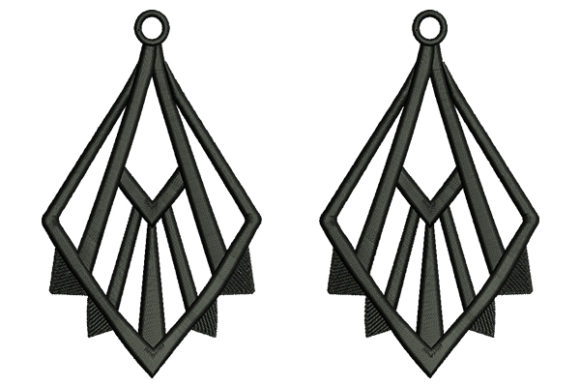
Earrings Jewelry Embroidery Design Review
As an embroidery designer who spends weekends navigating the hustle of craft fairs and handmade markets, I know that a design’s success isn’t just about how it looks in software. It is about how it performs under the bright lights of a booth, how it catches the eye of a passerby, and whether it translates into a handmade product that customers are willing to carry home. Today, I am reviewing the Earrings Jewelry design, a piece described as high-quality and cute, intended to embellish fabric and clothes. This review breaks down its potential for your fashion line, focusing on practical production, visual impact, and marketability.
First Impressions: The "Cute" Factor in a Crowded Market
The description highlights that Earrings Jewelry is "cute," which is a powerful keyword in the handmade world. In the context of machine embroidery design, "cute" often implies soft lines, playful shapes, or delicate details rather than bold, aggressive graphics. When I first look at a design like this, I am asking myself: Does it feel premium? Does it feel like a quick impulse buy?
For a craft fair booth, jewelry-themed designs have a natural advantage. They speak directly to the accessory lover, the gift-giver, and the fashion-forward crafter. If Earring Jewelry features realistic hoop earrings, dangling chains, or minimalist studs, it adds a touch of elegance to utilitarian items. However, if the design is too busy, it may lose that "cute" charm when stitched small. My initial judgment is that this design has strong potential for small shop products where detail matters more than scale. It feels decorative and personal, exactly the kind of item that sits on a display table next to hand-poured candles or artisan soaps.
Product Applications: Where Will Earrings Jewelry Shine?
To determine the best use for this embroidery file, we must look at specific product categories. A design that works well on one item might fail on another due to fabric texture or surface curvature. Here is how Earrings Jewelry likely performs across key crafter fair product types:
- Tote Bag Design: Canvas tote bags are the backbone of any market stall. Placing Earrings Jewelry as a central focal point on a neutral-colored bag creates a chic, urban look. Alternatively, stitching it as a small accent near the handle or zipper adds a subtle surprise. For a tote bag design, clarity is key; ensure the earrings do not merge together if the design is intricate.
- Apron Embroidery: Kitchen aprons are popular gifts. Positioning the design on the chest pocket or the bib area elevates a basic utility item into a stylish handmade product. The juxtaposition of a delicate jewelry motif on sturdy cotton or denim can be very appealing to buyers looking for unique kitchenware.
- Tea Towel Embroidery: Linen or cotton tea towels provide a smooth, stable canvas. Earrings Jewelry would look sophisticated here, perhaps repeated in a pattern or placed in the corner. This is a low-cost entry point for customers, making it a great add-on sale at the register.
- Embroidered Patch: Converting the design into a patch allows for versatility. You can attach these patches to denim jackets, backpacks, or hats. A standalone patch with a clean edge gives the buyer flexibility, increasing the perceived value of the digital embroidery file.
- Caps and Headwear: Curved surfaces present a challenge. If Earrings Jewelry has tiny details, they may distort on the front panel of a baseball cap. It works best if the design is simplified or if you use a structured cap that holds its shape well during stitching.
- Fabric Pouches and Cosmetic Bags: Small zippered pouches are excellent for showcasing detailed work. Because the surface area is limited, a compact Earrings Jewelry design ensures every stitch is visible. This is ideal for Etsy seller listings targeting gift buyers.
- Pillow Covers: For home decor enthusiasts, a square pillow case offers ample space. If the design is larger, it can serve as a statement piece in a living room setting, bridging the gap between fashion and home goods.
Production Practicality: Batch Making and Quality Control
When preparing for a weekend market, efficiency is money. I need to know if Earrings Jewelry is easy to produce in batches. Designs with high stitch density take longer to run and consume more thread, which cuts into profit margins. If the earrings feature heavy satin stitches or dense fill areas, production time will increase.
Furthermore, consider the thread colors. Jewelry designs often rely on metallic threads (gold, silver) or specific shades to mimic real gems. Metallic threads can be temperamental, breaking more easily or requiring slower machine speeds. If the design calls for complex color changes, it increases the risk of human error during hooping and threading. For a successful commercial embroidery run, I recommend testing the design multiple times to ensure consistency. A single flawed piece can tarnish your brand reputation at a fair.
Photography and Visual Appeal for Online Listings
In today’s market, your printable mockup is just as important as the physical product. Customers cannot touch the embroidery through their screens. Therefore, Earrings Jewelry must translate well in photos. Designs with clear outlines and good contrast photograph better. If the design relies on subtle shading or very fine lines, it may look muddy in a photo taken with poor lighting.
Focus on close-up shots that highlight the texture of the stitches. Show the earrings on different fabrics—a rough linen vs. a smooth cotton—to demonstrate versatility. Use natural light to capture the sheen of any metallic threads. A strong finished product image drives clicks and conversions, especially for Etsy sellers competing in a crowded marketplace.
Careful-Use Notes and Technical Checks
Before committing to mass production, there are critical technical checks every designer must perform:
- Check Stitch Density: Inspect the design for overly dense areas. If the fabric puffs up excessively, the design may look bulky and unprofessional. Adjust the density settings in your embroidery software if necessary.
- Review Tiny Details: If Earrings Jewelry includes small charms or text, ensure they are large enough to be readable after stitching. Tiny details often get lost in the fabric weave, especially on textured materials like tea towel embroidery backgrounds.
- Select the Right Stabilizer: The stability of the fabric is crucial. Use tear-away stabilizer for lightweight fabrics and cut-away for stretchy materials like jersey or knit caps. Incorrect stabilizer choice leads to puckering, which ruins the aesthetic of a craft fair product.
- Confirm Hoop Size: Ensure the design fits within your standard hoops without awkward trimming. A design that requires excessive trimming loses time and risks damaging the fabric edges.
- Test on Scrap Fabric: Always run a test stitch on the actual fabric you plan to sell. Colors shift depending on the material’s absorbency and texture. What looks white on screen might appear off-white or gray on a specific cotton blend.
- Commercial Licensing: Verify the license terms of the design assets. Most platforms require a commercial license to sell finished goods. Selling without proper rights can lead to legal issues and account bans on marketplaces like Etsy.
Final Verdict: A Strong Contender for Boutique Makers
Earrings Jewelry appears to be a versatile and charming addition to any embroiderer’s library. Its "cute" aesthetic aligns perfectly with current trends in fashion accessories and home decor. By applying it to tote bags, aprons, and patches, you can create a cohesive collection that appeals to a wide range of customers.
The key to success lies in execution. Pay attention to stitch density, choose high-quality threads, and present your handmade product with professional photography. If you follow these guidelines, Earrings Jewelry has the potential to become a bestseller at your next craft fair or online store. Remember, in the world of handmade goods, quality and presentation are everything. Take the time to perfect your technique, and let the design speak for itself.